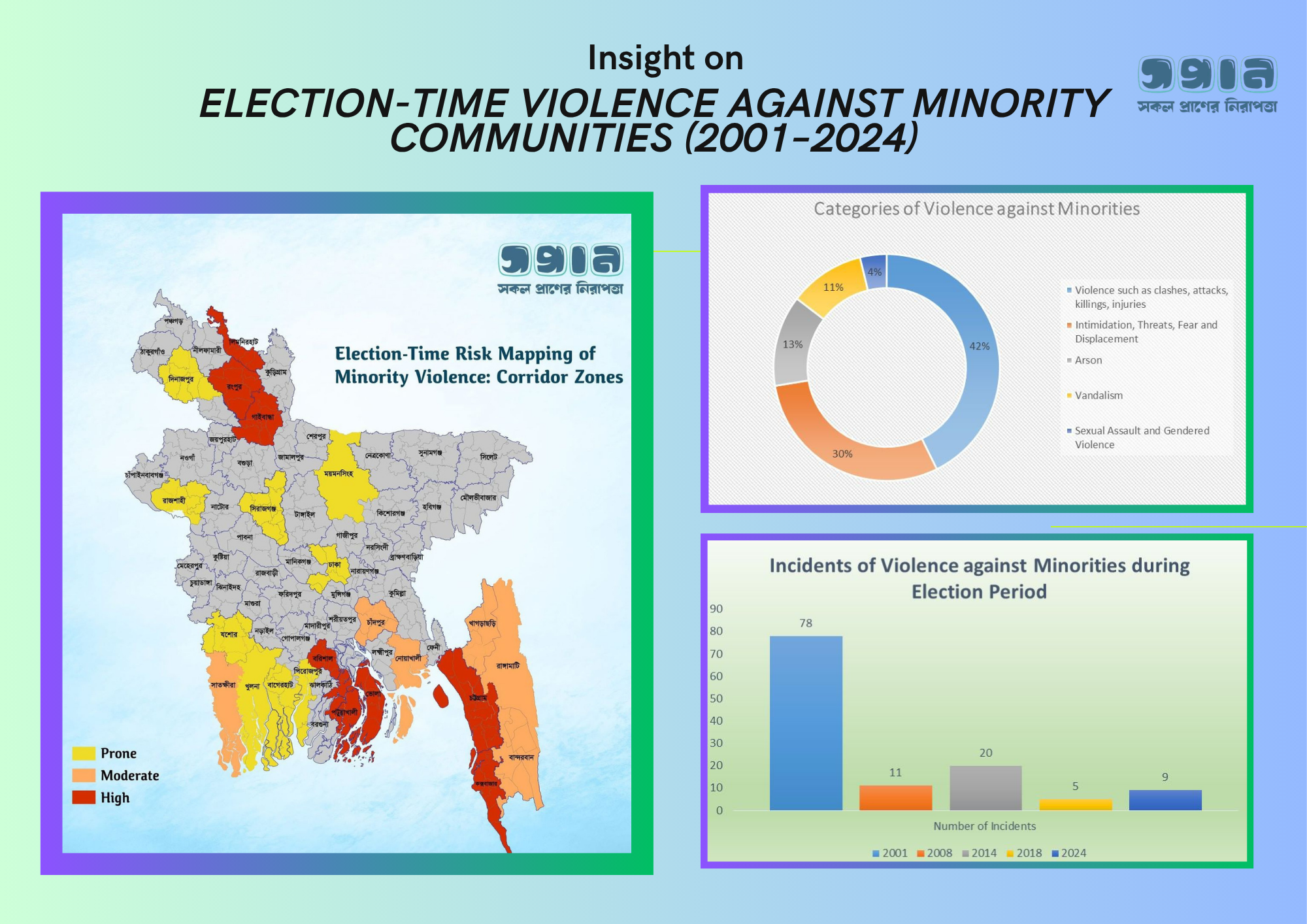
This policy brief maps two decades of election-related violence against minority communities in Bangladesh (2001–2024), identifying recurring patterns and predictable geographic hotspots along with current risks based on recent incidents. It shows how violence shifts beyond polling day into pre- and post-election periods, leaving minorities disproportionately exposed. The brief calls for hotspot-based, early, and sustained preventive actions to safeguard lives, livelihoods, and inclusive democratic participation.

See More
Lorem ipsum dolor sit amet, consectetur adipisicing elit. Architecto amet, velit quam beatae a temporibus exercitationem quos debitis eligendi nulla iure, vitae facere, laboriosam minima omnis iste pariatur illum ex! Lorem ipsum dolor sit amet consectetur adipisicing elit. Voluptatem, pariatur recusandae adipisci dicta dolorem quidem! Cupiditate excepturi dolorem, corporis itaque nisi alias? Unde illo, debitis assumenda delectus quisquam dolorum ea? Lorem ipsum dolor sit amet consectetur adipisicing elit. Doloremque ut et vitae nobis in inventore quia totam eveniet. Possimus ipsum itaque explicabo aliquid nobis voluptates fugiat exercitationem voluptatibus architecto quaerat.

06 April 2026
See More
See More
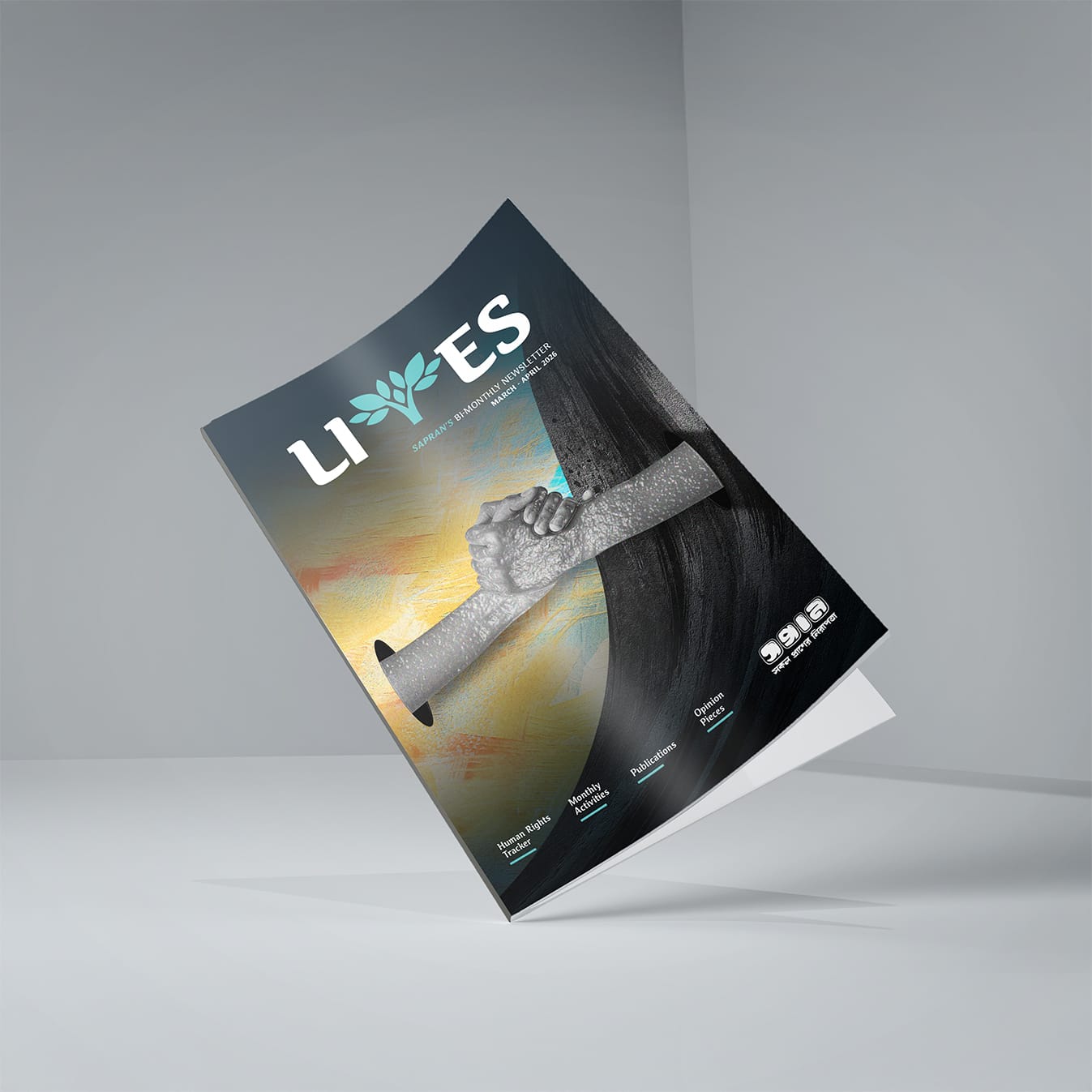
The November-December 2025 issue of Lives, Sapran's bi-monthly newsletter, captures a period of intensified human rights documentation, institutional collaboration, and transitional justice advocacy in Bangladesh. It features the Human Rights Violence Tracker, a systematic monitoring tool documenting patterns of state violence, kneecapping, and pellet gun injuries across the country. The issue highlights high-level meetings with Sweden's Human Rights Ambassador, the International Rehabilitation Council for Torture Victims (IRCT), and the Omega Research Foundation to strengthen ethical documentation standards and survivor centered evidence building. It also covers panel discussions on kneecapping as a tool of political repression, a seminar on the prohibition of pellet guns at Begum Rokeya University, and a photography exhibition on enforced disappearance and extrajudicial killings co organized with OHCHR. Through workshops on community health worker organizing, policy dialogues on community care, and collaborations with BLAST on post-uprising violence, Lives examines how rigorous research, survivor centered advocacy, and institutional partnerships are shaping accountability and human rights in Bangladesh's transitional period.
Read More